



Home About Gallery Voice Coaching E-Learning Blog Book Alisa

Jazz · Pop · Soul

Alisa
Amouage

A voice that moves hearts  ·  elevates every moment

Scroll
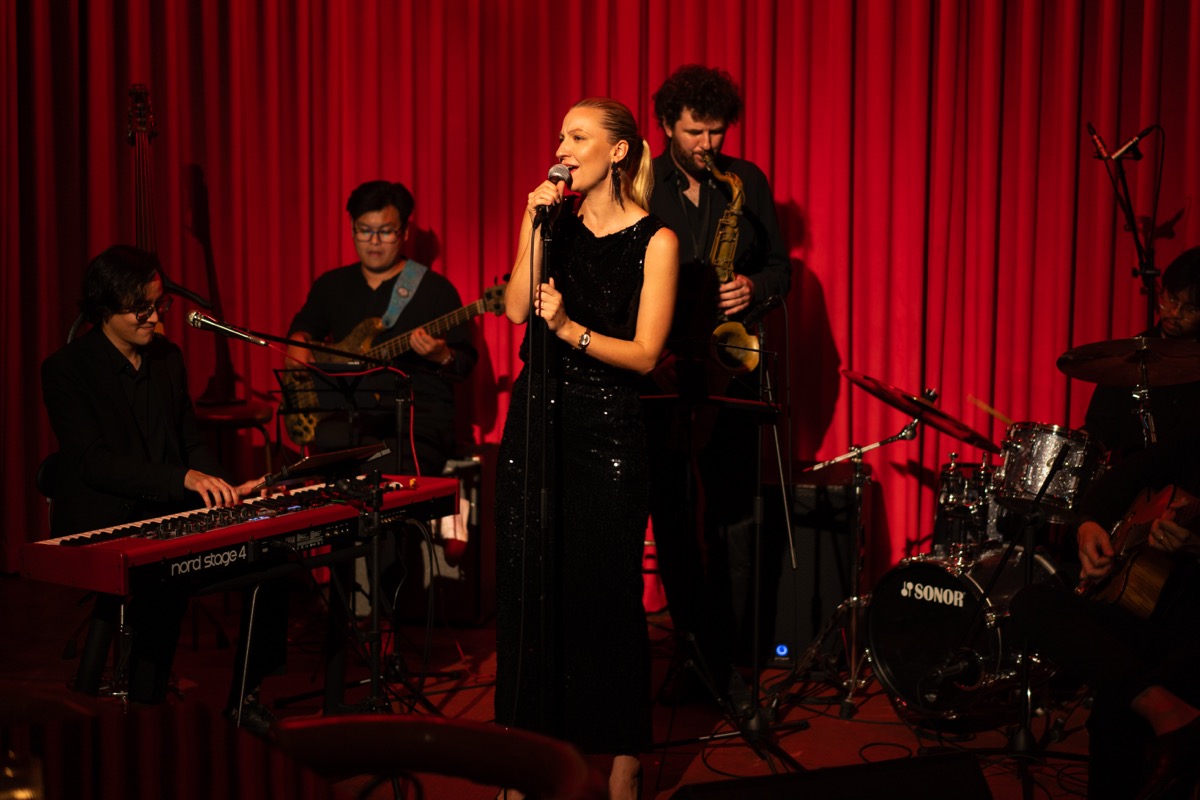
Alisa Amouage performing

Warmth,
elegance, soul.

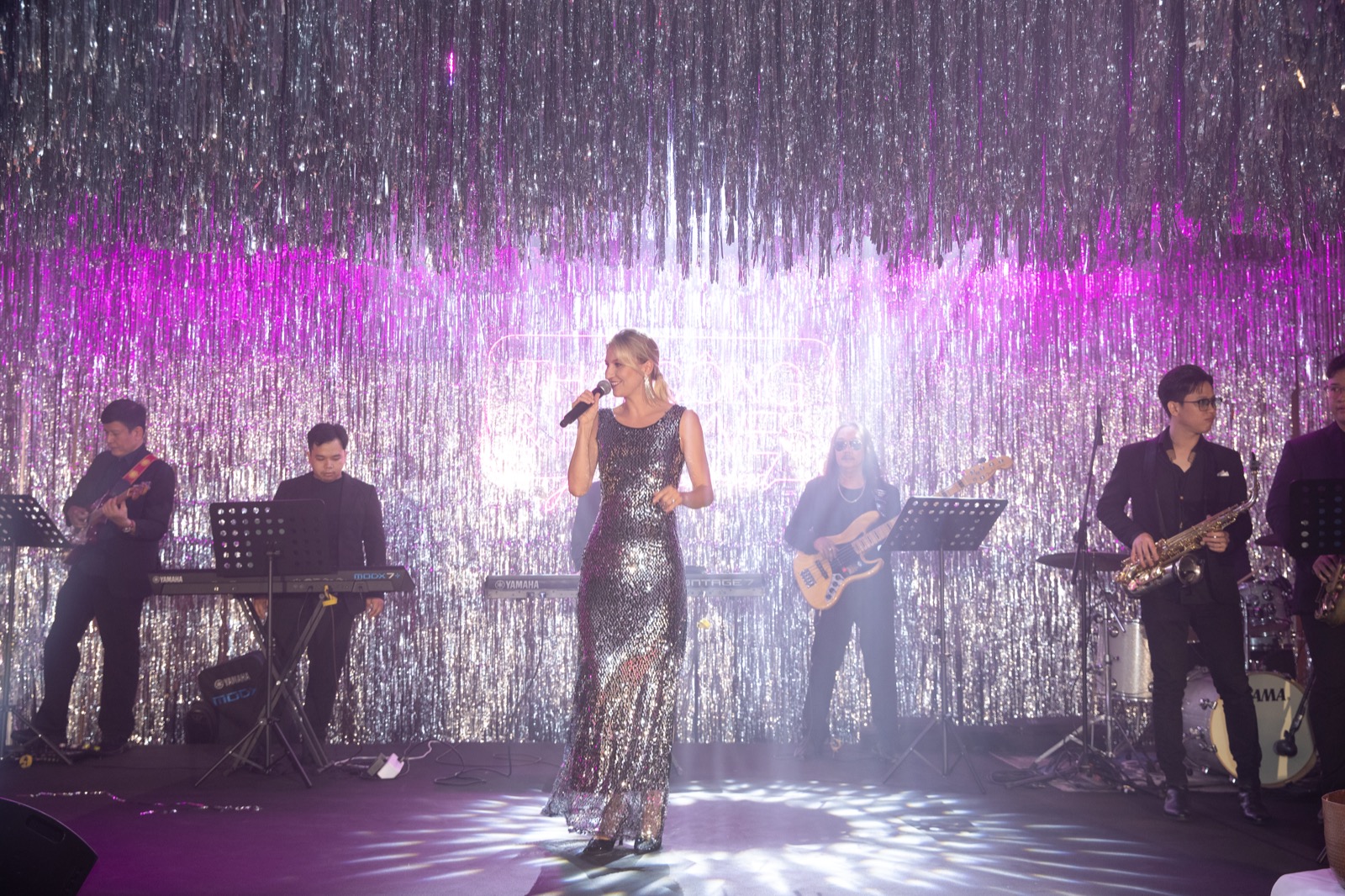
Alisa Amouage is a jazz-pop vocalist with over 15 years of experience transforming events into lasting memories. Trained at the University of Modern Arts in Moscow, she brings a rare blend of classical technique and heartfelt emotion to every stage she graces.

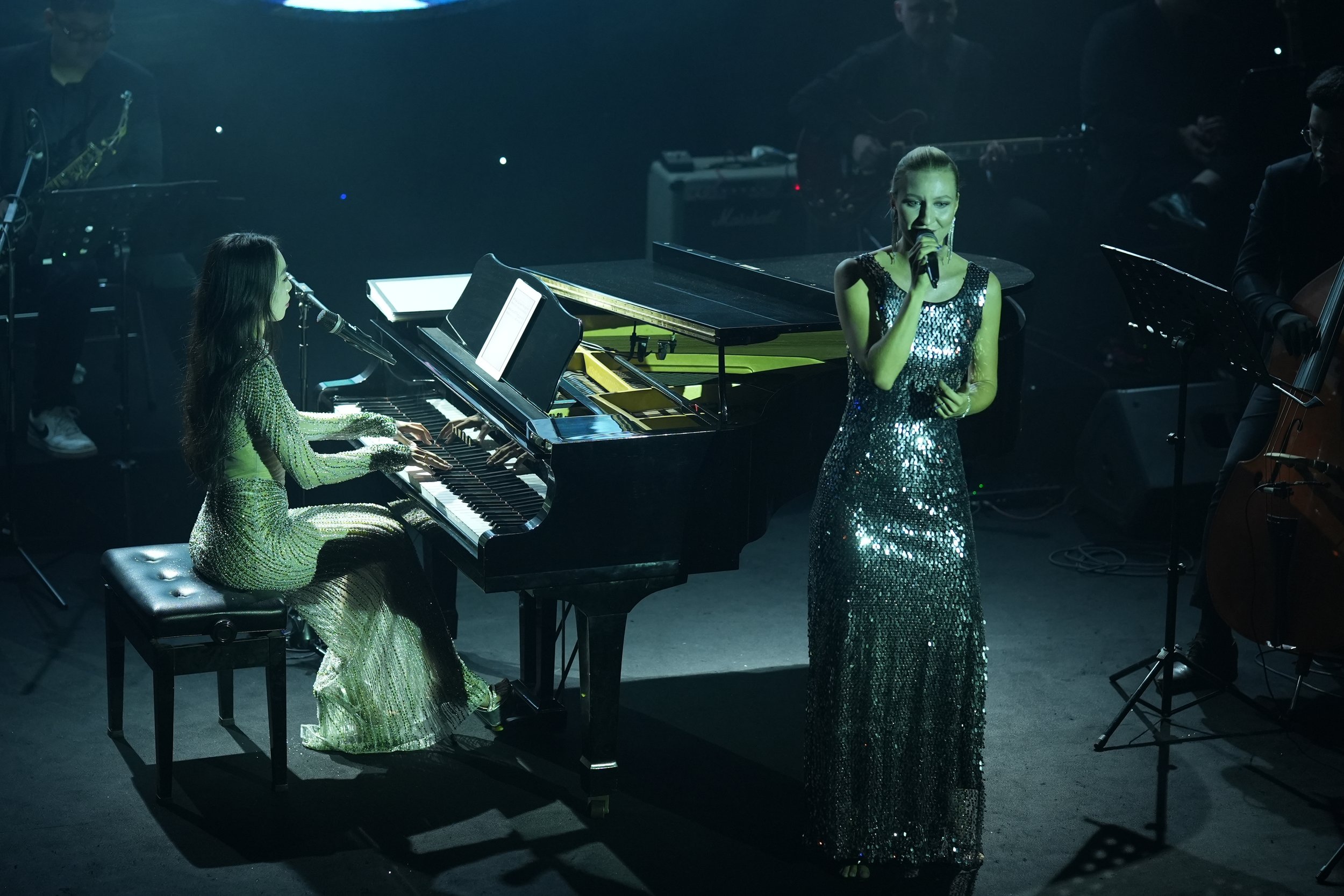
Her voice carries the intimacy of late-night jazz clubs and the grandeur of concert halls. Whether performing at an intimate corporate dinner or a landmark gala, Alisa's presence is unmistakable — warm, polished, and deeply human.

Currently working on her debut album, Alisa continues to captivate audiences across Southeast Asia with her signature sound.

15+
Years performing
50+
Stages & venues
6
Countries

Hear what she
sounds like live.

Studio Live Session

Showreel

Dancing Cheek to Cheek

Água de Beber · Harbour Energy 20th Anniversary

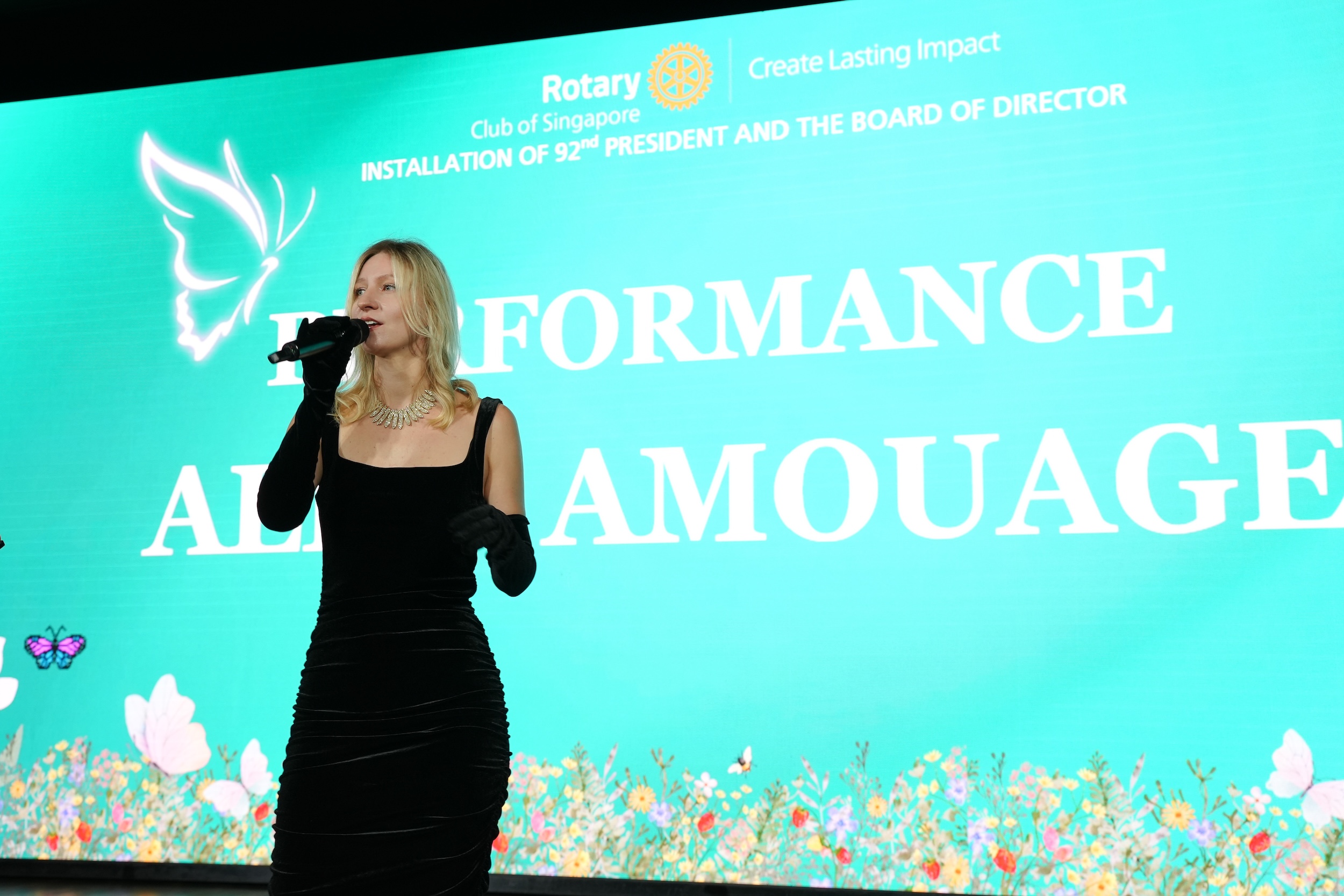
Rotary Club of Singapore Installation Gala

Where the
music lives.

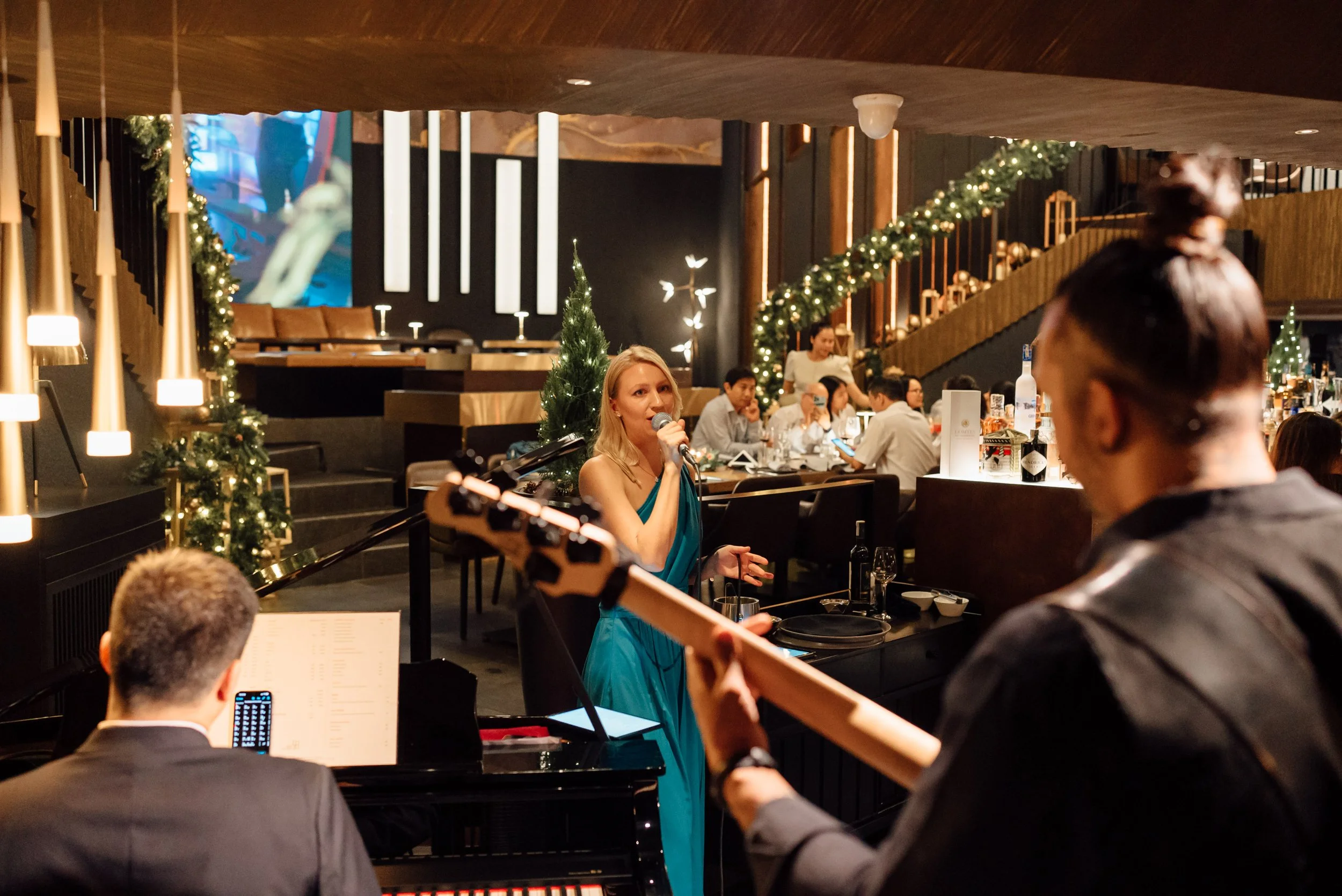
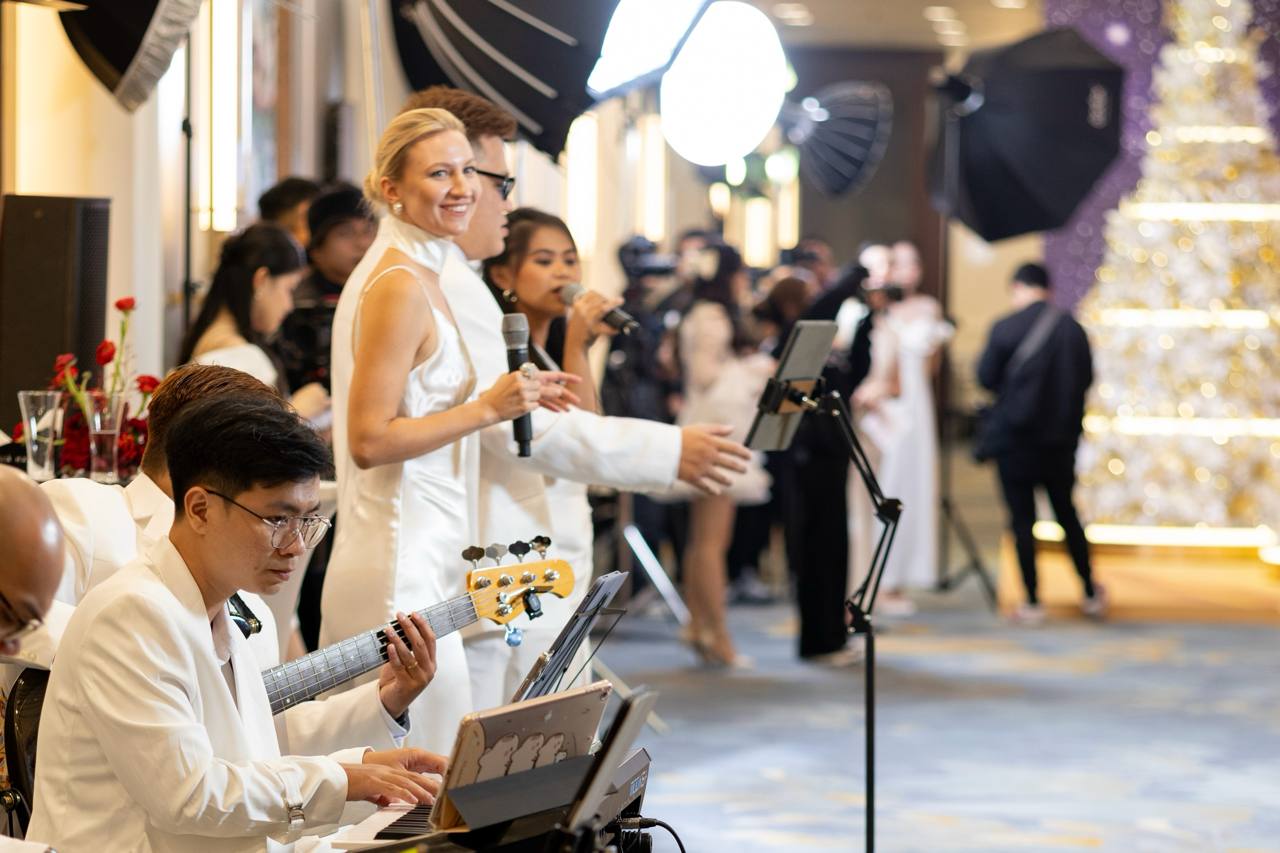
From whisky bars to five-star hotel galas, from intimate anniversary dinners to landmark corporate celebrations — Alisa brings the same total commitment to every room.

Singapore Flyer
Singapore
Rotary Club Welcome Dinner
The Ritz-Carlton, Millenia
Singapore
Rotary Club Installation Ceremony
Park Hyatt
Ho Chi Minh City
Wedding
Zannier Hotel
Bai San Ho
NYE Dinner
Capella Hanoi
Hanoi
Corporate Gala
La Casa Del Habano
Ho Chi Minh City
Residency
The Landmark Vietnam
Ho Chi Minh City
30th Anniversary
The Love Unfolds
Vietnam
Orchestral Concert
Harbour Energy
Vietnam
20th Anniversary
Bebop Saigon
Ho Chi Minh City
Live Performance
Clay / Cocktails & Cuisine
Ho Chi Minh City
Residency
Lavender by Chang
Hanoi
Anniversary Dinner

"Ready to make your
next event unforgettable?"

Book Alisa

The Voice
Readiness
Programme

A structured voice coaching system built to help you sound ready for what comes next — under pressure, under the spotlight, when it matters most.

One framework.
Every context.

The Alisa Amouage Voice Readiness Programme is built around a single methodology — the 5C Voice Framework — applied to different speaking contexts based on what you need to do with your voice.

This is not a different method for each outcome. The framework stays the same. The application changes.

Voice readiness is the ability to rely on your voice in important moments — clear, steady, confident, and credible — not only when things feel comfortable, but especially when pressure is present, stakes are high, or attention is focused on you.

Programme Formats

  • Four-week one-to-one coaching engagements
  • In-house workshops for teams and leaders
  • Executive briefings and keynote speeches
  • Group coaching programmes

Pricing

Programme investment varies by format and duration. Contact Alisa directly for a tailored proposal.

Enquire about pricing →

The 5C Voice Framework

C
Clarity
Precise articulation so every word lands with intention
C
Confidence
Vocal authority that holds when pressure is highest
C
Calmness
Breath control that keeps your voice steady under stress
C
Competence
Technical mastery of tone, resonance, and pacing
C
Charisma
Warmth and presence that makes an audience lean in
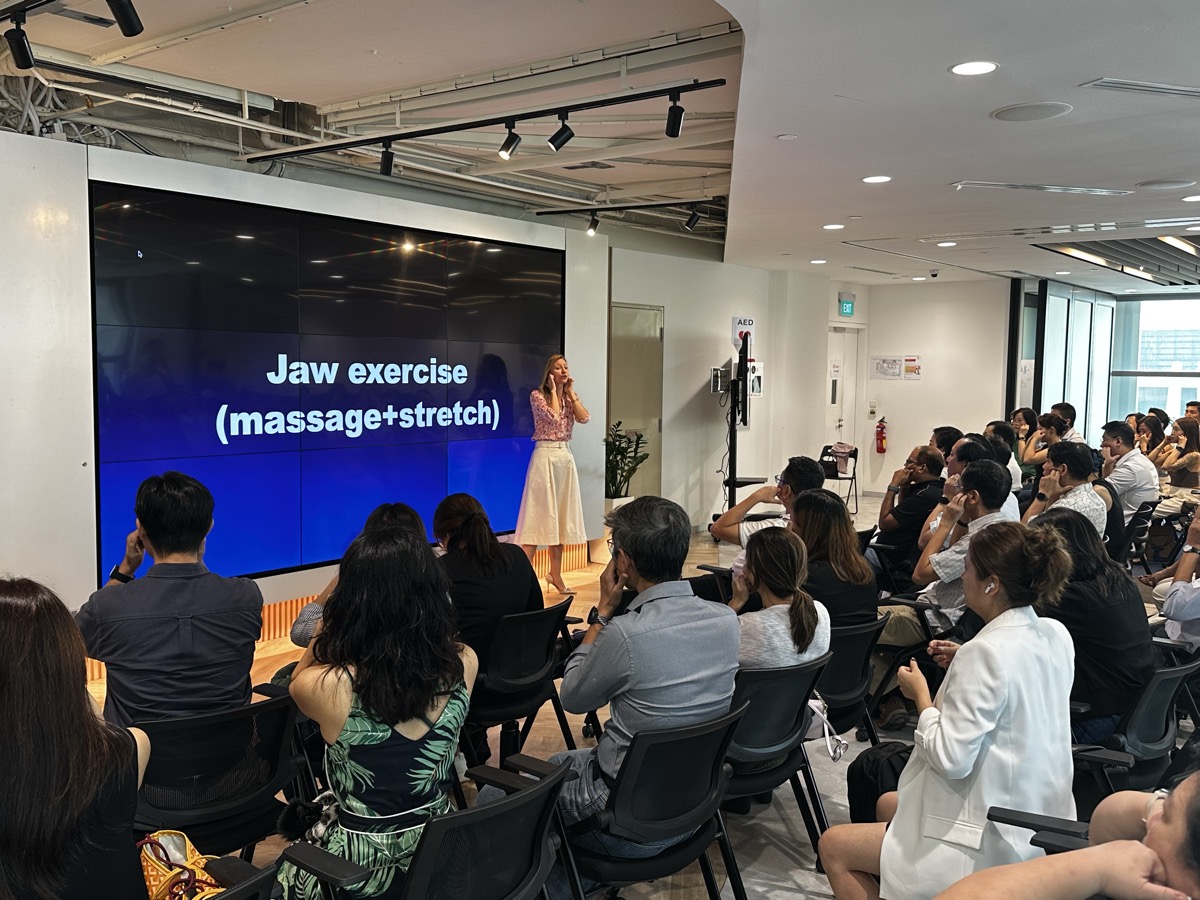
Alisa Amouage coaching session

Why your voice
matters.

Voice readiness is grounded in physiology, neuroscience, and behavioural psychology. How we breathe and speak directly affects cognitive clarity, emotional regulation, and perceived credibility.

01
Regulated Breathing
Improves focus and emotional control by influencing heart rate variability and stress hormone levels — the foundation of a steady, trustworthy voice.
02
Vocal Stability
Increases perceived confidence and credibility. Listeners unconsciously judge authority and competence through tonal consistency and pacing.
03
Reduced Vocal Tension
Supports sustained performance and stamina. Releasing tension allows your full vocal range to emerge naturally under pressure.
04
Clear Articulation
Improves listener trust and comprehension. When words land cleanly, audiences process ideas faster — and trust the speaker more deeply.

The right programme
for your context.

Each track uses the same 5C framework, with outcomes tailored to your specific speaking environment.

Leadership
Voice Readiness for Leadership Presence
For leaders who need a voice that sounds clear, steady, and composed across team conversations, decision-making moments, feedback, and difficult discussions.
Executive
Voice Readiness for Boardroom Meetings
High-stakes environments where judgment, credibility, and composure are closely observed. Trains vocal control during complex discussions and scrutiny.
Stakeholder
Voice Readiness for Stakeholder Meetings
For leaders communicating across diverse groups. Develops a voice that sounds grounded, trustworthy, and aligned while managing tension and expectation.
Client-Facing
Voice Readiness for Client Presentations
Helps professionals sound clear, warm, and assured while explaining ideas — building trust rather than pressure.
Sales
Voice Readiness for Sales Presentations
Trains vocal control during persuasion, objection handling, and closing conversations. Sound confident, composed, and credible throughout.
Stage
Voice Readiness for Keynote Presentations
Prepares speakers for extended time on stage — consistency, stamina, and vocal control from opening to close.
High Visibility
Voice Readiness for TEDx Talks
Built for high-visibility talks where every detail matters. Focuses on vocal precision, emotional control, and delivery under heightened expectation.
Recording
Voice Readiness for Audiobook Recordings
For authors and narrators recording over long periods. Focuses on stamina, consistency, and clarity across extended sessions.

Voices that
transformed.

"The masterclass increased my team's awareness of voice and communication impact. My team feel more confident and clear in the way they sound instantly. A practical and valuable skill."
Charles Juay
Group Financial Services Director, Charles Juay Organisation
"The workshop helped our agency understand voice mechanics — tonality, clarity and how to sound more confident through practical exercises and demonstrations. Highly recommended for professional development."
Thng Wei Hao
Director, Perennial Alliance
"Alisa's hands-on exercises were immediately impactful — we could see and feel the changes in our voice in real time, and apply them directly to our daily work."
Lee Wil-Son
Manulife Financial Advisers

Ready to sound like
yourself at your best?

Get in touch and Alisa will recommend the right programme for your goals.

Work with Alisa

Professional training,
powerful presence.

Structured, practical voice training for real-world communication. Build clarity, confidence, and presence that holds under pressure — at your own pace.

Available Now on Udemy

Voice Development Training for Public Speakers & Presenters

Unlock the full potential of your voice and speak with confidence, clarity, and charisma. Whether on stage, online, or in the boardroom, Alisa shares the proven techniques she has mastered over 15 years of captivating live audiences.

Sections9
Lectures50
Length2h 47m
PlatformUdemy
  • Breath control and vocal warm-up techniques
  • Tone, resonance, and projection for any room
  • Managing nerves and performing under pressure
  • Pacing, pausing, and commanding attention
  • Stage presence and charismatic delivery
  • Practical exercises for use before any presentation
Enrol on Udemy
Voice Development Training
Coming Soon

Voice Readiness for Sales Professionals

A dedicated course applying the 5C Voice Framework to the specific demands of sales — building rapport, handling objections, and closing with confidence.

StatusIn Development
Register Interest
Coming soon

What students
are saying.

★★★★★
"Amazing course! I have been searching for one where I can learn how to sound more confidently during important business meetings and presentations and I think this one absolutely fits the purpose! Highly recommend it to anyone who is looking for practical exercises. Alisa makes it very fun and entertaining — you don't feel how time passes by."
Natalia
★★★★★
"I really enjoyed the course. The instructor makes it quite fun and her personality brings the course to life, despite it being a recorded video. You get some immediate takeaways! Very effective techniques. Great course, highly recommend it!"
Kamenii
★★★★★
"Alisa demonstrates authenticity as she delivers practical tips which — as she repeats often — are important, however small they may seem. The course needs frequent revisiting as the practices need to become habits for them to make the difference."
Sandeep
★★★★★
"Taught everything without boring a single minute in a very humorous way. It is rare to find a teacher like this. Thanks."
Sanjeev
★★★★★
"The trainer has designed this course with the objective of most effective learning using simple and innovative techniques. Essential and definitely recommend worthy!"
Nidhi
★★★★★
"I enjoy this training. It has a lot of exercises for understanding and cultivating the voice. Thanks a lot!"
Spyros
★★★★★
"This was a really informative course with plenty of easy-to-do-at-home exercises to train your voice for public speaking. Alisa teaches in a very natural, calm and inclusive way that puts you at ease, and makes it easy to follow along. Thanks so much!"
Anja
★★★★★
"The information is very easy and pleasant to take in. Everything is great and enjoyable!"
Katie
★★★★★
"It is wonderful and the host is quite interactive."
David

Train on your
own terms.

01
Learn at your pace
Revisit any module as many times as you need. The techniques stay with you because you practice them at the moments that matter to you.
02
Real-world application
Every exercise is designed to be used in actual professional situations — not just rehearsed in isolation. Practical technique from day one.
03
15 years of mastery
Alisa brings the discipline of a classically trained vocalist and the hard-won experience of a professional performer to every lesson.

Want something more
tailored to you?

The e-learning courses are a great starting point. For deeper, faster transformation, explore Alisa's one-to-one coaching programme.

Get in Touch

Notes on voice,
presence & performance.

Insights on vocal technique, stage presence, performance mindset, and the art of communicating with impact.

Alisa performing
How to Stop Your Voice From Shaking When the Stakes Are High

The moment you care most is often when your voice betrays you. Here is what is actually happening physiologically — and the one technique that changes everything.

Read article →
Alisa performing at Rotary Club
Why Live Music Changes the Energy in a Room

There is a moment — usually within the first 30 seconds of a live performance — when you can feel the entire room shift. Here is what is really happening.

Read article →
Alisa performing
The 5-Minute Vocal Warm-Up I Do Before Every Performance

These exercises prime your breath, open your resonance, and settle your nerves — in five minutes.

Read article →
Alisa performing
What Jazz Taught Me About Holding a Room's Attention

Jazz is built on listening and responding. The best performers — and the best presenters — share the same quality: genuine presence.

Read article →

How to Stop Your Voice From Shaking When the Stakes Are High

The moment you care most about what you are about to say is often the moment your voice decides to betray you.

You have prepared. You know your material. And yet the second you stand up — or pick up the phone for that important call — your voice tightens, rises in pitch, and develops a tremor you have never noticed before.

I know this feeling intimately. Not just from coaching speakers, but from my own years on stage. The bigger the room, the bigger the occasion, the louder the internal noise. And here is what I have learned: a shaking voice is not a weakness. It is a physiological response. Understanding that changes everything.

What Is Actually Happening

When the stakes feel high, your nervous system activates a stress response. Cortisol and adrenaline flood your system. Your muscles tense — including the muscles around your larynx. Your breath becomes shallow, moving from your belly up into your chest. Less breath, more tension, and your vocal cords begin to vibrate unevenly.

The result: a voice that shakes, rises, or disappears entirely at the worst possible moment.

This is not a character flaw. It is your body trying to protect you from what it perceives as danger. The problem is that your body cannot tell the difference between a high-stakes presentation and an actual threat. It responds to both the same way.

The Technique That Changes It

The answer is not to "calm down" — that instruction never works and only adds pressure. The answer is to redirect the breath before you speak.

Here is what I do, and what I teach every client: before you say your first word, take one slow breath that expands your belly outward — not your chest upward. Hold it for two counts. Then release it slowly. Let it fall, do not push it out.

This single breath activates your parasympathetic nervous system. It signals to your body that you are safe. Within seconds, the tension in your larynx begins to ease.

Train It Before You Need It

The challenge is that this technique only works under pressure if you have practised it without pressure. Like any physical skill, it must become automatic before the stakes are high enough to override conscious thought.

My recommendation: every morning, before you speak your first sentence of the day — whether to a colleague, on a call, or to yourself — take that one belly breath first. Make it a ritual. Three weeks of this and your voice will know exactly what to do when it matters most.

Your voice is not failing you in those moments. It is asking for guidance. Give it one breath, and it will give you everything you need.


Alisa Amouage is a jazz-pop vocalist and executive voice coach with over 15 years of performance experience. She teaches the 5C Voice Framework to leaders, speakers, and performers across Southeast Asia.

Want to go deeper?

Explore Alisa's Voice Readiness Programme — or start with her Udemy course today.

The 5-Minute Vocal Warm-Up I Do Before Every Performance

People are often surprised when I tell them that the five minutes before I walk on stage look nothing like what they might expect.

No pacing. No last-minute rehearsals. No running through the setlist in my head. Just five deliberate minutes of physical preparation — the same routine, whether I am performing at a hotel gala for three hundred guests or a private dinner for twenty.

After fifteen years of performing, this is the routine I have refined down to what actually works.

Minute 1 — The Breath Reset

Before I touch my voice, I reset my breath. I stand with feet hip-width apart, place one hand on my belly, and breathe in slowly for four counts — letting my hand rise outward. I hold for two counts, then exhale for six. I do this three times. By the third breath, I can feel my shoulders drop and my jaw loosen. This is the foundation. Everything else builds on it.

Minute 2 — Lip Trills

I close my lips gently and blow air through them so they flutter — like the sound of a small motorboat. I run this trill up and down a gentle scale, five notes up and five notes down. This warms the lips, engages the breath support, and begins to loosen the vocal cords without straining them. If your lips do not trill easily at first, place your fingers lightly on your cheeks to support the muscles.

Minute 3 — Humming

With lips closed, I hum on a comfortable mid-range note and slide it slowly up and down — not forcing the high or low extremes, just exploring the middle of my range. I feel for the vibration in my chest first, then in my nose and cheeks. This activates resonance — the quality that gives a voice presence and warmth across a room.

Minute 4 — Articulation

I work through a sequence of consonant combinations: "puh-puh-puh", "tuh-tuh-tuh", "kuh-kuh-kuh" — fast, crisp, deliberate. Then: "red lorry, yellow lorry", said slowly at first, then at full speed. Crisp articulation is what allows your words to land clearly at the back of a large room without raising your volume.

Minute 5 — Siren and Settle

I finish with one slow siren — a sound that glides from the bottom of my range to the top and back down, like a signal moving away in the distance. Then I stop. One more belly breath. And I let the voice settle in silence for a moment before stepping on stage.

That silence at the end is not wasted time. It is when the body integrates everything and prepares to perform.

Five minutes. Every time. It has never let me down.


Alisa Amouage is a jazz-pop vocalist and executive voice coach with over 15 years of performance experience. She teaches the 5C Voice Framework to leaders, speakers, and performers across Southeast Asia.

Want to go deeper?

Explore Alisa's Voice Readiness Programme — or start with her Udemy course today.

What Jazz Taught Me About Holding a Room's Attention

I spent years trying to figure out what separates a performer who merely fills a room from one who genuinely holds it.

It is not the size of the voice. It is not technical perfection. And it is certainly not volume.

What I discovered — slowly, through hundreds of performances and the discipline of jazz — is that the real skill is listening.

Jazz Is a Conversation

Most people think of performing as something you do to an audience. You deliver. They receive. The energy flows one way.

Jazz taught me that this is wrong — or at least, incomplete.

In jazz, musicians listen to each other constantly. Every phrase I sing is a response to what the pianist just played. His next phrase responds to mine. The drummer listens to both of us and shifts accordingly. A jazz performance, at its best, is a live conversation between musicians — and when it is working, the audience becomes part of that conversation without even realising it.

What This Looks Like in Practice

When I walk onto a stage, the first thing I do is listen to the room before I sing a single note. I feel the energy — is the audience quiet and expectant? Restless? Distracted by noise from the bar? Warmed up and ready?

Then I adjust. Not drastically — but in the same way a jazz pianist might shift the tempo slightly to bring a wandering room back, I shift my energy, my pacing, my volume, my eye contact to meet the audience where they are.

A performer who ignores the audience's energy and delivers a fixed, rehearsed set will always feel like a presentation. A performer who listens and responds will always feel like an experience.

The Pause Is Part of the Performance

Jazz also taught me the power of silence. A well-placed pause — before a key line, after a phrase that needs to land, at the moment of highest tension — is not empty space. It is some of the most powerful real estate in a performance.

Silence invites the audience to lean in. It creates anticipation. And it signals confidence: only someone who is truly in control of a room is comfortable letting it be quiet.

Whether you are a singer, a speaker, a leader, or anyone who has to command attention — learn to pause. Learn to listen. Learn to respond to the room rather than simply perform at it.

That is what jazz taught me. And it has changed everything about how I communicate.


Alisa Amouage is a jazz-pop vocalist and executive voice coach with over 15 years of performance experience. She teaches the 5C Voice Framework to leaders, speakers, and performers across Southeast Asia.

Want to go deeper?

Explore Alisa's Voice Readiness Programme — or start with her Udemy course today.

Why Live Music Changes the Energy in a Room

There is a moment — usually within the first 30 seconds of a live performance — when you can feel the entire room shift.

Conversations soften. People look up from their phones. The background chatter that filled the space a moment ago fades, not because anyone asked for silence, but because something more compelling has entered the room.

I have experienced this hundreds of times from the stage. And every time, it reminds me why live music is not just entertainment — it is one of the most powerful tools an event can have.

Recorded Music Fills Space. Live Music Transforms It.

There is nothing wrong with a great playlist. But recorded music, no matter how carefully curated, is fundamentally fixed. It was made somewhere else, at another time, for no one in particular. It occupies the air without engaging it.

Live music is different. It is happening now, in this room, for these people. A live performer is reading the audience, adjusting tone and tempo in real time, responding to the energy in the space. That responsiveness creates something a playlist never can: a genuine sense of occasion.

When people feel that something is being performed for them, they become participants rather than bystanders. The entire dynamic of the room changes.

The Science Behind the Shift

This is not just intuition — there is real psychology behind it. Live music triggers the release of oxytocin, the bonding hormone, in ways that recorded music does not replicate to the same degree. When people hear a voice or an instrument in the same physical space, their nervous systems synchronise in subtle ways. Heart rates align. Breathing slows. A shared experience forms, even between strangers.

Event planners know this instinctively, even if they have never read the research. The rooms that people remember are almost always the ones where something live happened.

What I See From the Stage

I have performed at whisky bars, corporate galas, wedding receptions, leadership dinners, and installation ceremonies. The venues are different. The guests are different. But the shift is always the same.

A table of executives who arrived stressed from a long day begin to relax their shoulders by the second song. A room of strangers at a networking event find a natural opening to speak to each other — the music gave them a shared reference point. Guests at a gala dinner linger longer than they planned because leaving now would mean leaving something that feels alive.

Live music creates permission — permission to unwind, to connect, to be present in a way that a corporate agenda rarely allows.

For Event Hosts: What This Means Practically

If you are planning an event and deciding whether live music is worth the investment, here is what I would tell you:

The question is not whether your guests will notice the difference. They will. The question is what you want them to feel — and what you want them to remember about the evening you created.

Live music is not background. Done well, it is the emotional architecture of your event. It sets the tone before a single speech is made. It carries the room through transitions. It gives your guests something to talk about on the way home.

In fifteen years of performing, I have never had a client tell me the live music was too much. I have had many tell me it was the thing that made the night.


Alisa Amouage is a jazz-pop vocalist and executive voice coach with over 15 years of performance experience across Southeast Asia and Europe. She performs at corporate events, galas, private dinners, and landmark celebrations.

Bring live music to your next event.

Get in touch to discuss how Alisa can set the tone for your occasion.

Book Alisa